
This two-hour walking tour aims to read the GDR through its architecture—bold, inconsistent, and ideologically charged. From Soviet grandeur to prefab modernism to faux-medieval nostalgia, the city’s fabric reveals how East Germany built, reimagined, and ultimately contradicted itself.
Rather than viewing architecture as a mere instrument of power, this tour approaches it as a cultural expression—one that allows us to understand the political, aesthetic, and historical aspirations of a vanished state.
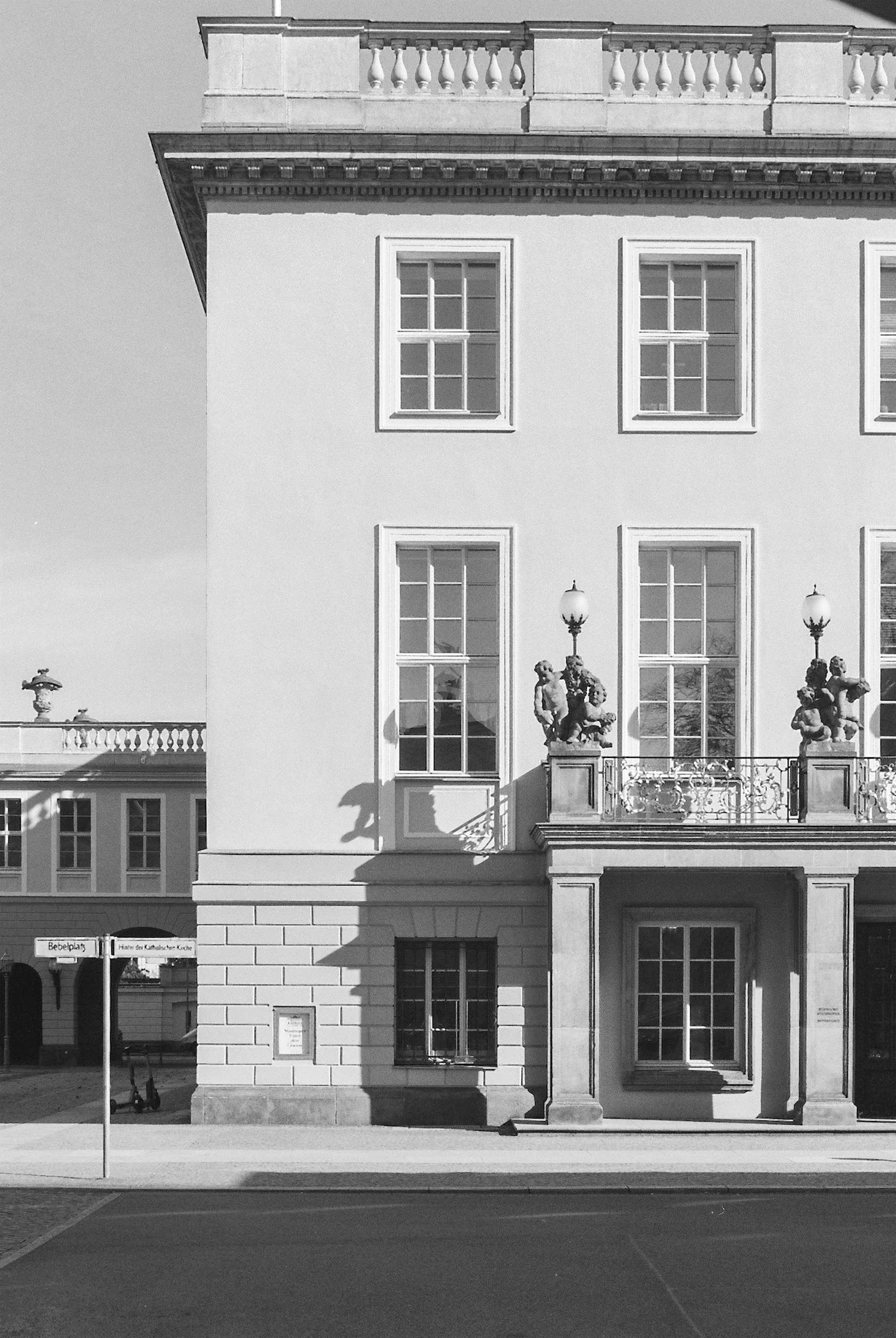
Scarred by wartime destruction, Bebelplatz on Unter den Linden stands as the first architectural ambition of the GDR: to realise, under Moscow’s influence, the doctrine of “national tradition.” Under the direction of Richard Paulick, buildings such as the Kronprinzenpalais and the Prinzessinnenpalais were reconstructed in the 1950s, alongside the restoration of the Berlin State Opera. Behind it stands the present-day Barenboim-Said Akademie, an anachronistic curiosity: a baroque architectural language conceals the fact that this is a completely modern building without any direct historical precedent.
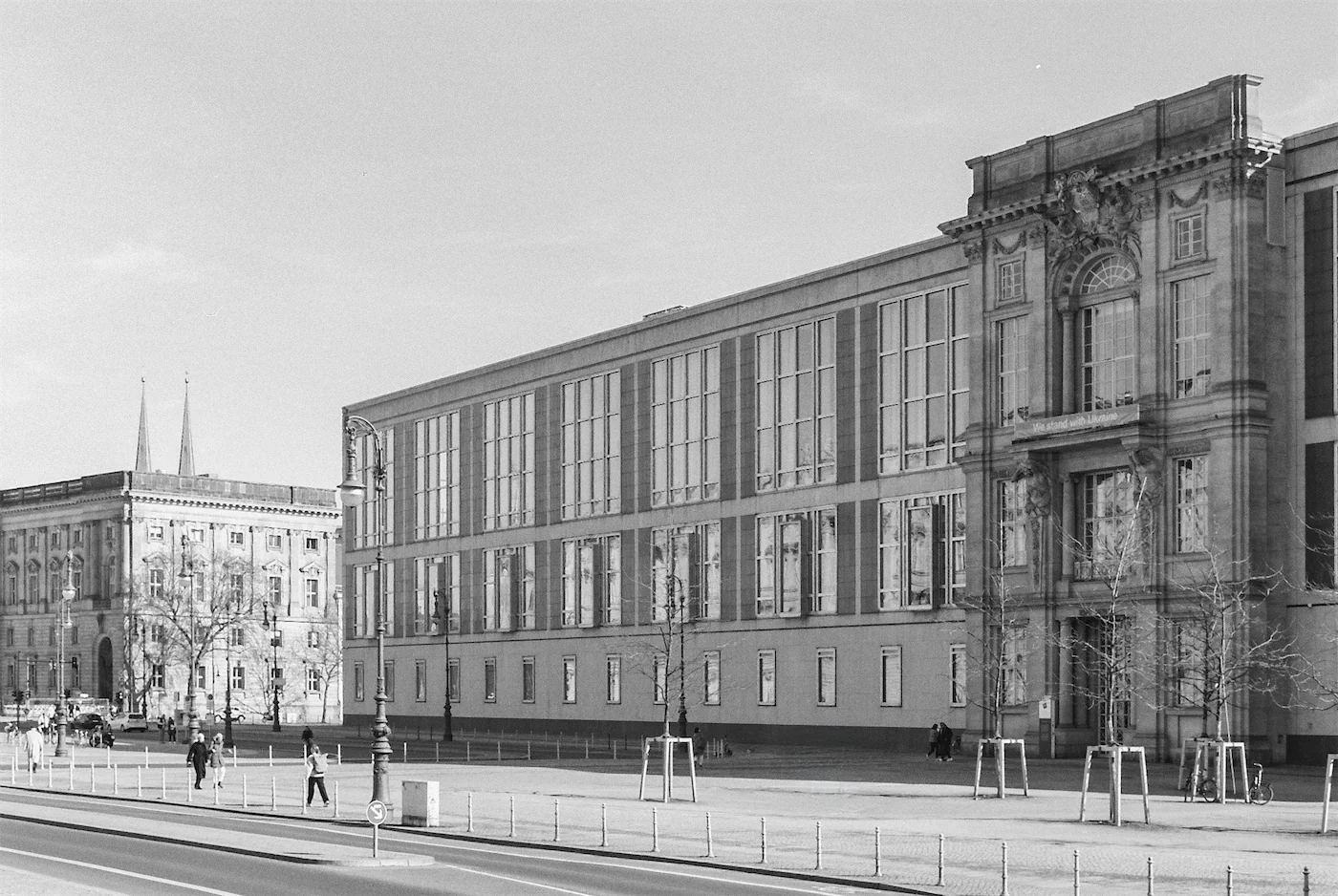
The Staatsratsgebäude (1962–64) condenses this negotiation into a single, precise gesture. By incorporating the portal from which Karl Liebknecht proclaimed the socialist republic in 1918, the building constructs a deliberate historical lineage, binding political authority to a selectively interpreted past.
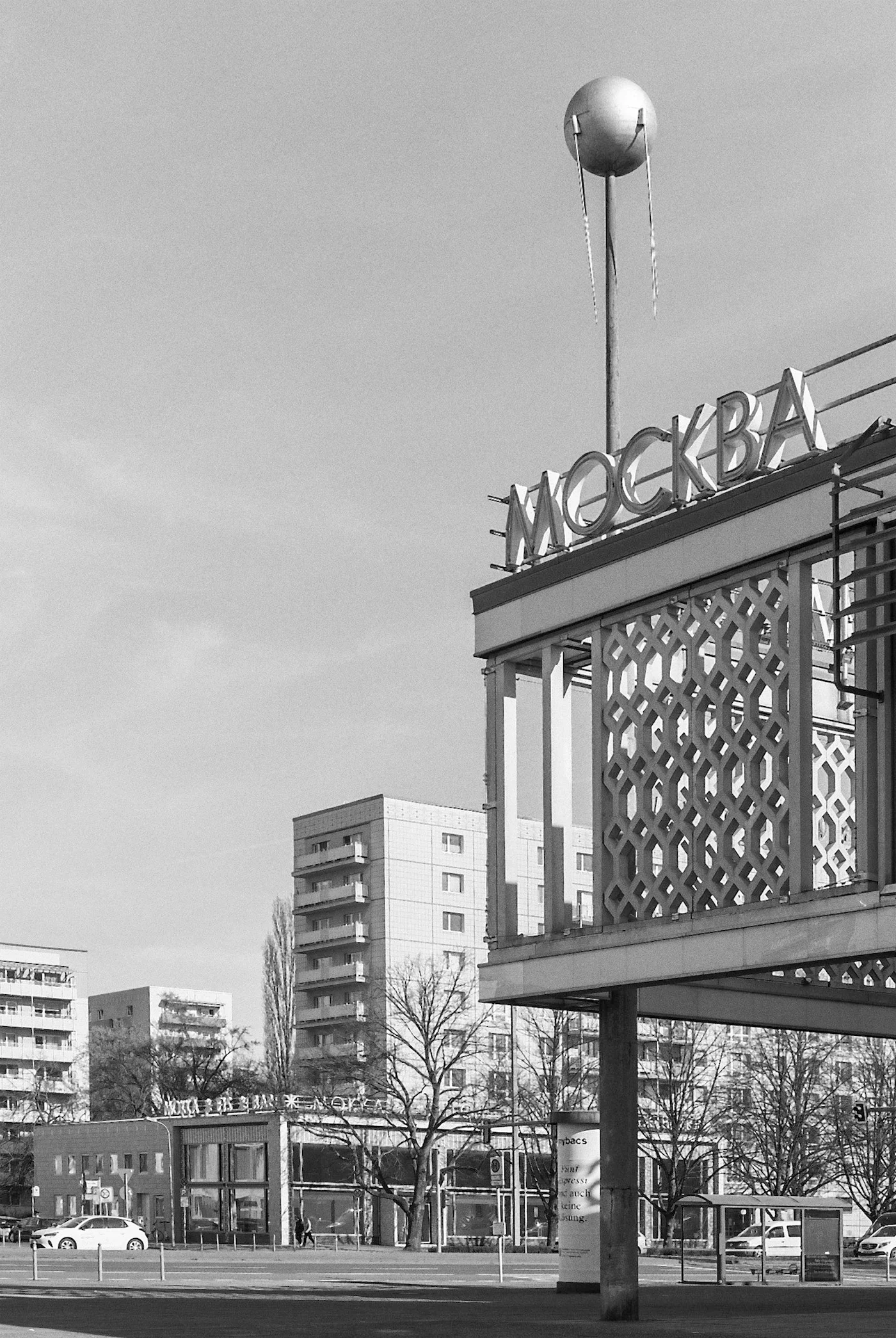
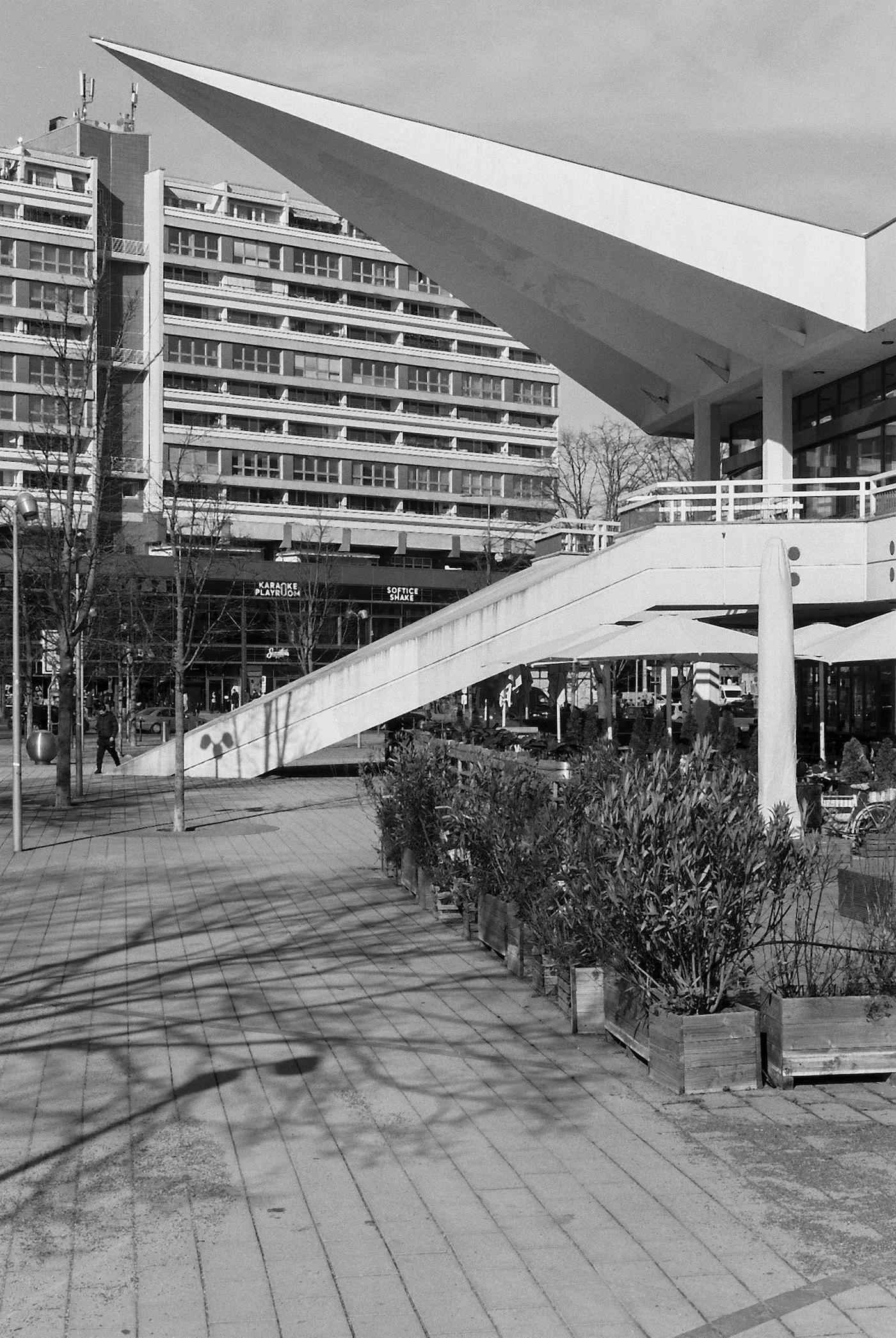
A decisive rupture unfolds in the early 1960s, as industrial modernism replaces the monumental classicism of the previous decade, most visibly along Karl-Marx-Allee and in the emerging city centre around Alexanderplatz. Hermann Henselmann develops a lighter, more open architectural language through buildings such as the Kino International (1961–63), the Café Moskau (1961–64), and the surrounding pavilion structures, articulating a vision of a modern socialist metropolis oriented towards everyday life.
At Alexanderplatz itself, this vision takes on an explicitly representational form. The Haus des Lehrers (1961–64), with its continuous mosaic frieze by Walter Womacka, translates ideology into image, while the Fernsehturm Berlin (1969) dominates the ensemble as a symbol of technological progress and urban scale.
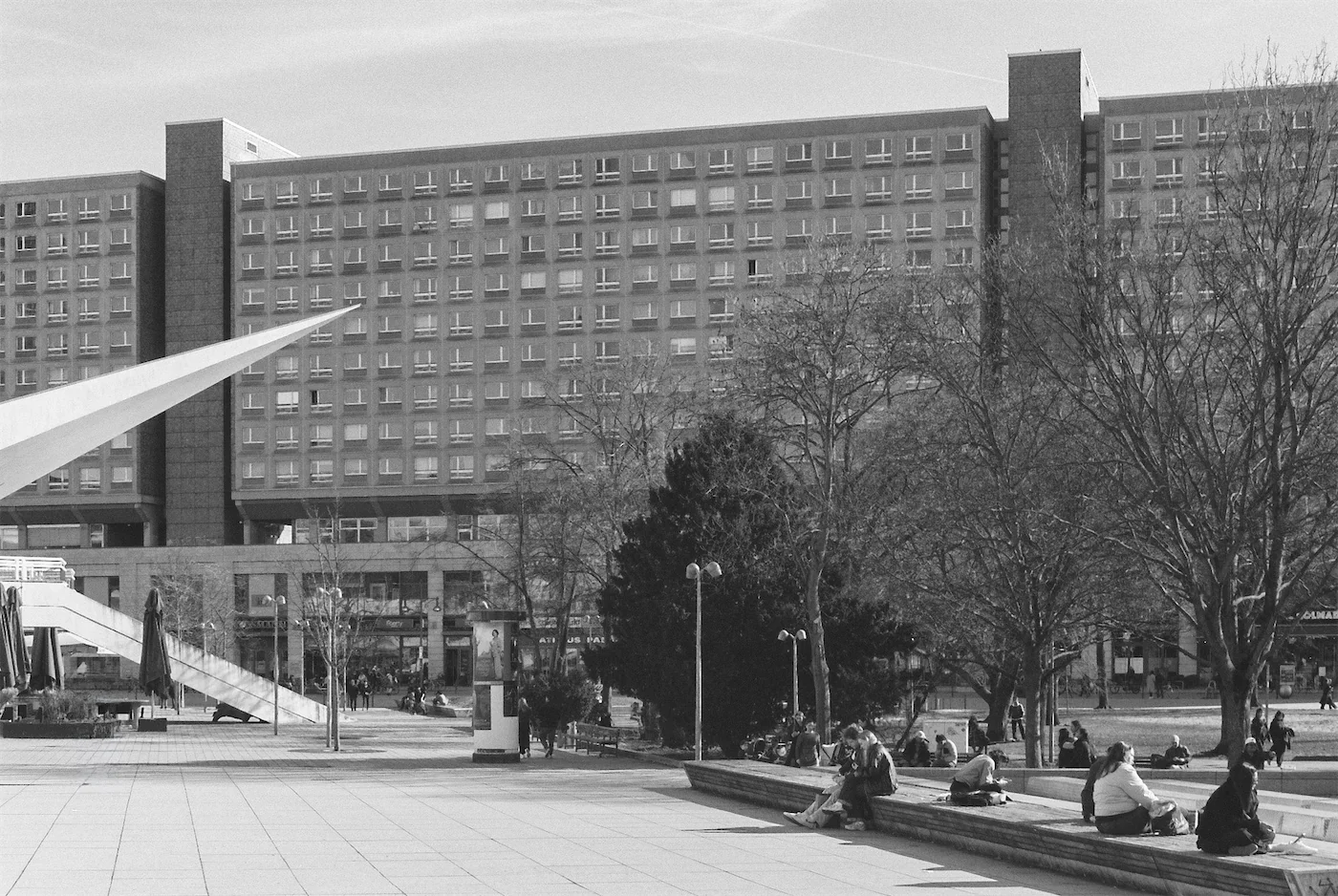
In the 1970s, a deepening housing crisis shifts the focus towards functionality and social infrastructure. The Rathauspassagen (1971–73) exemplify this phase: a large-scale, pragmatic complex combining housing, commerce, and services, recalling in its ambition the logic of Le Corbusier’s Unité d’habitation, yet realised under the conditions of centralised planning.
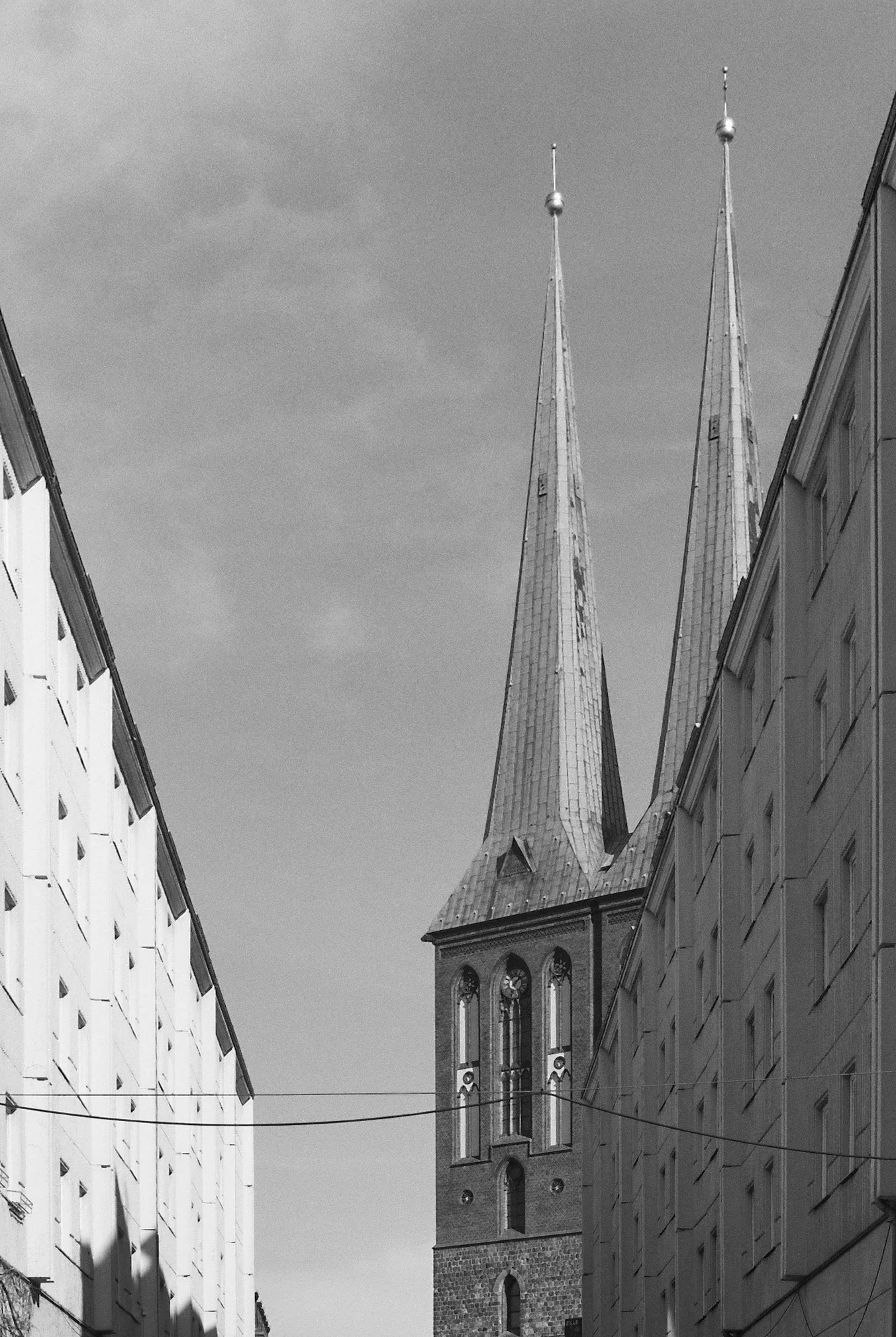
The Nikolaiviertel (1980–87) marks a final turn back towards history. In a deliberately staged return to “tradition,” the GDR, on the occasion of Berlin’s 750th anniversary, sought cultural anchoring and identity, reconstructing an idealised pre-modern urban fabric and thereby producing less a recovery of history than its narrative form: an architectural construction of continuity for a state negotiating its own historical self-understanding.